This is a write up of Sharon and Iain’s provocation that was delivered at Fircroft’s Summer Symposium on the 3rd of July 2026. This provocation allowed for discussion on the decline of adult education and the importance of creating dialogic learning spaces. Sharon and Iain’s work within the Research Circle over the past 5-6 years represents one of these spaces, where collaborative practice and dialogue are encouraged.
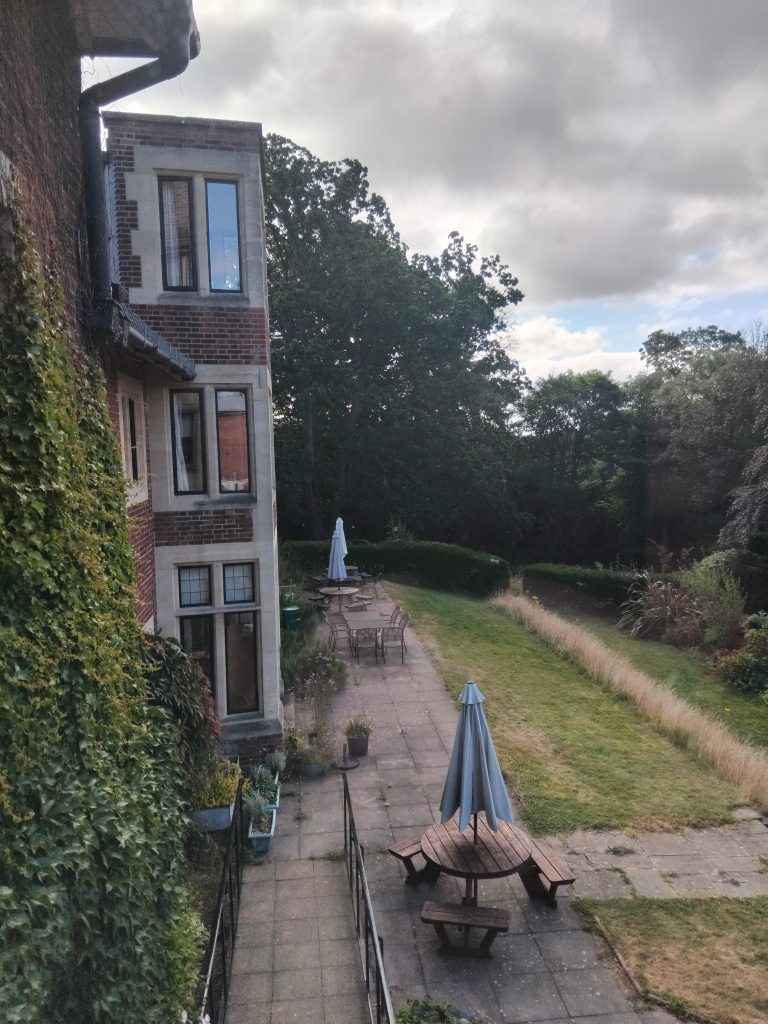
Image of Fircroft college and gardens taken by Sharon Clancy.
By Sharon Clancy and Iain Jones
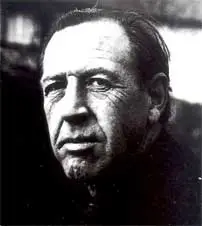
We want to talk about space – space to talk, space to share and learn – spaces which offer the chance to reflect, exchange stories and act with like-minded people – to celebrate the notion of ‘living words’ in action and the vital role of open dialogue to democracy. This is part of Raymond Williams’ conception of education for the common good, of public education which he argued was ‘as much a matter for concern in challenging inequalities in society, as were questions about the ownership of capital or the means of production’ (Williams, 1968, p.245)1.
In the last 10 to 15 years, we have witnessed (and decried) a huge decline in the availability of adult education and community spaces for collective learning. In the early 2000s, according to the Institute for Fiscal Studies2, around 5.4 million publicly funded adult courses were taken annually in England (Stanistreet, 2026)3. By 2024–25, that had fallen to around 1.7 million, a drop of about 70 per cent, with the biggest contraction among adults aged 25 and older. In particular, the number of publicly funded classroom-based qualifications taken by adults in England fell from 5.6 million in 2004–05 to 2.3 million in 2023–24, a reduction of 58% (Drayton et al., 2025)4.
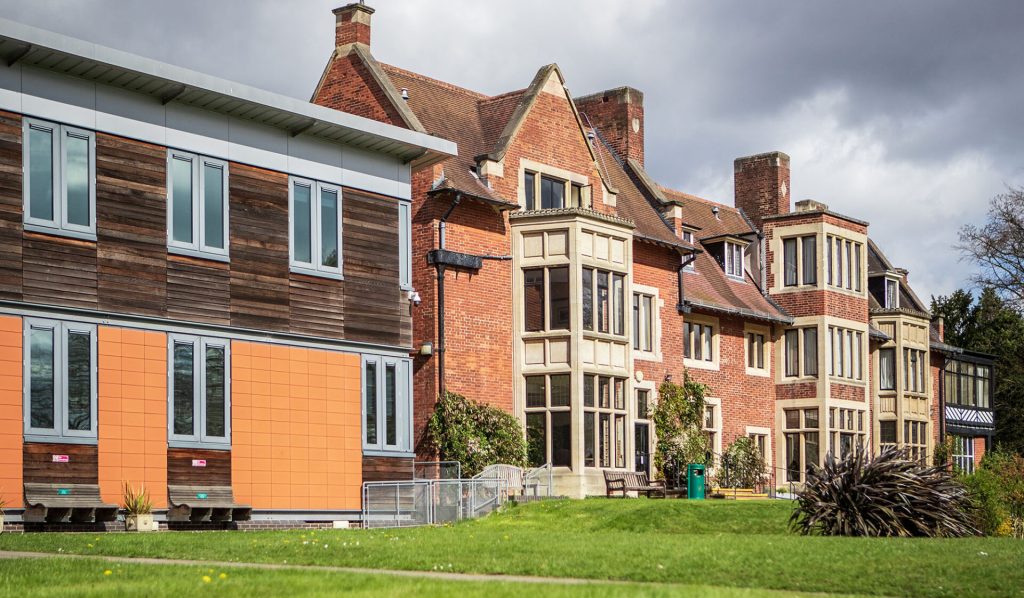
Picture of Fircroft College, taken from their website.
We have seen the ruthless closure of community-based adult education centres across the country (largely initiated by Reform-led councils) and eight closed in Derbyshire alone last year in some of the hardest hit communities in the area. We have witnessed the ongoing closure or mergers of residential adult education college spaces such as Wedgwood Memorial College in Stoke, Coleg Harlech in Wales, and, most recently, the merger of Northern with Barnsley college, with only Fircroft remaining as a fully independent college. At their height, post-Second World War, it is estimated that thirty-five to forty such short-term residential colleges were created, often in the stately homes of the former aristocracy, to meet a growing need for second chance and progressive education for adults across the country. What had been inaccessible spaces, spaces of privilege, were opened to the non-elite through education, and the colleges were described by several former students as creating access to places associated with the ‘1%’ and as ‘the Poor Man’s Eton’.
Looking back at the 1919 Report on Adult Education, the focus on every page was on the social (civic and humane) function of adult education. Public funding was essential, the Report argued, to expand political and industrial democracy. Only that expansion would challenge and remedy the abuse, discrimination and inequality experienced by working-class people. In fact, so focussed was the Report on the role of adult education in overcoming the democratic deficit at the end of the First World War that an abridged version, published in 1956, was titled: A Design for Democracy (Waller, 1956)5. So where have things gone so horribly wrong and what can we do collectively to fight against this?
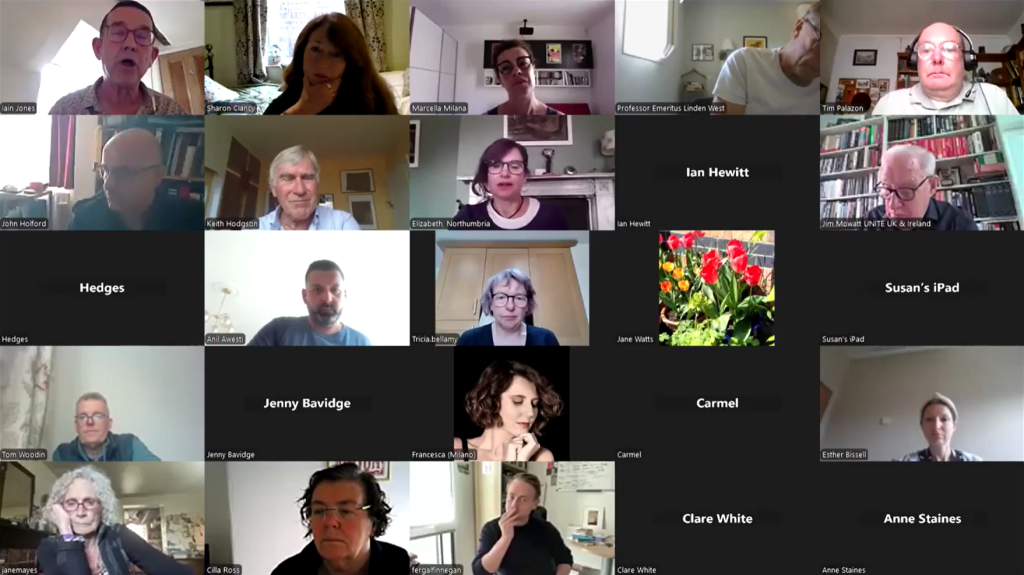
Picture of Research Circle online attendees.
The Research circle on Fostering and building community, democracy and dialogue first met in September 2020. It grew out of the work of the Centenary Commission on Adult Education and, in particular, the key chapter in the Commission’s 2019 report that focused on the importance of community-based and ‘popular’ adult education. The Research Circle has sought to become a site of possibility and hope and a space for praxis, showcasing the importance of in/visible education, of ‘Learning that happens in everyday life which is in/visible because it is purposively ignored and devalued, but is education because it is powerful and formative’ (Quinn, 2024)6.
In the last five to six years, the circle has engaged with diverse ideas. It has asked: how does adult education link with and foster our democracy? Why are our shared histories, memories, and instances of managing previous struggles all-important? The writers of the 1919 Report faced these questions head on – they recognised that our democracy and spaces for dialogue, debate and dissent need to be defended and constantly fought for. This has, arguably, never been truer than at the current juncture in the UK, in countering a sense of despair and impotence, particularly in the communities hardest hit by the exigencies of the past four decades.
Research circles offer a form of collaborative practice and dialogue between higher education, community practitioners and partners in adult lifelong education. Building on the work of Harnsten (1994)7 the circle has identified problems that receive no or limited attention, including, specifically, who and what shapes the world of education; how it is controlled and whose voices are heard; and how we might liberate conventional structures of lifelong learning. A theme emerging out of our dialogues is ‘what do we mean by democracy and can we still reason with each other?’ We concluded that what lies at the heart of a living democracy are safe, protected spaces with clear ground-rules where we can listen respectfully in dialogue – sometimes with others radically opposed to our own perspectives.
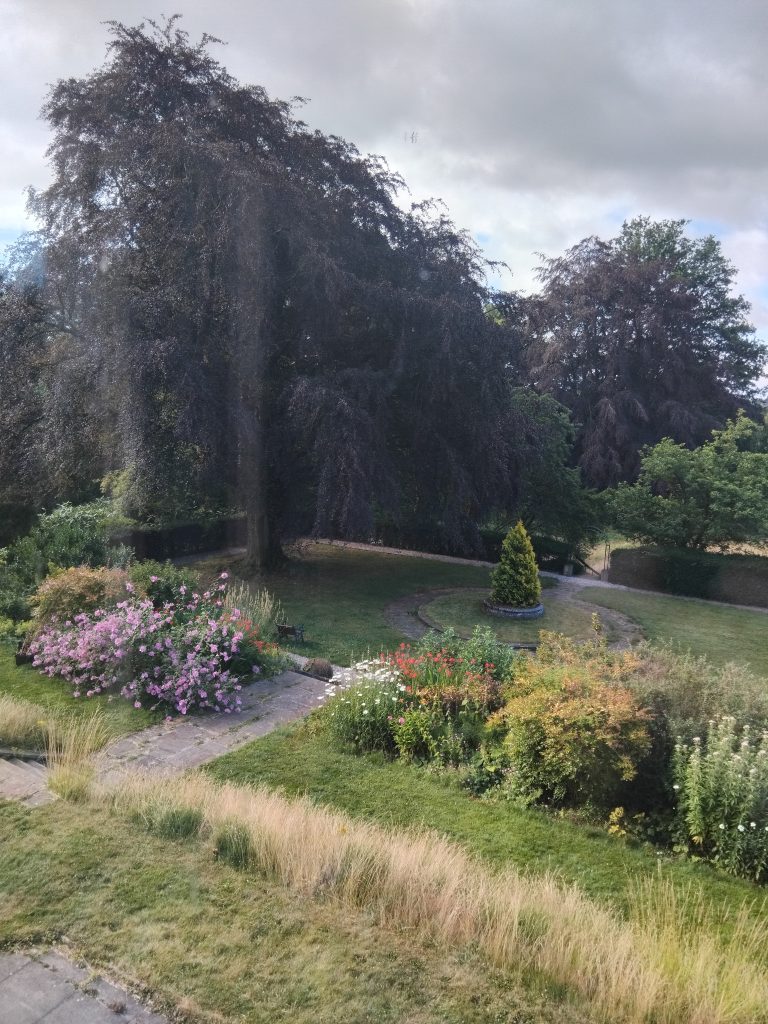
Image of Fircroft gardens taken by Sharon Clancy.
Speaking personally (Sharon), the Research Circle has been a very nourishing space – a place to explore shared interests and values with like-minded people and to learn from others’ knowledge. It has emphasised the value of talking, of trying to give voice to what often feels inchoate and unformed. Juxtaposed against the brutal restructuring situation at University of Nottingham, for me it has felt like an important space for recognition and for creating and sustaining spirit, as well as a place to think as ‘a realistic utopian’ (Stevenson, 2023, p.24)8. It has helped me find moments for personal resistance and rebellion and, crucially, for ‘wilful remembering’ (taken from Iain’s interest in ‘wilful forgetting’ – Clancy and Jones, 2024, p.130)9, through a focus on shared history, being a ‘backwards travellers’ (Evans, 1956, p.16)10 looking forwards, by learning from the past to inform our future. This space may be online in the main, but it has foregrounded a ‘society-first’ approach and has allowed for a re-politicisation of education through socially organised event spaces that acquire meaning through the alliances, networks, and organisational ecologies that sustain them.
References
Clancy, S., Jones, I. (2024). ‘The private, the public and the common good: loss and learning in a contemporary research circle’, FORUM, 66(3), 126-138. Available at: https://doi.org/10.3898/forum.2024.66.3.14
Drayton, E., Farquharson, C., Ogden, K., Sibieta, L., Snape, D. and Tahir, I., (2025). Annual report on education spending in England: 2024–25. IFS report. Available at: https://ifs.org.uk/publications/annual-report-education-spending-england-2024-25
Evans, G.E. (1956). Ask the Fellows Who Cut the Hay. London: Faber and Faber
Great Britain. Ministry of Reconstruction. Adult Education Committee. (1956). A design for democracy: an abridgement of a report of the Adult Education Committee of the British Ministry of Reconstruction, commonly called The 1919 report, with an introduction, The years between. London: Max Parrish
Harnsten, G. (1994). The Research Circle- Building Knowledge on Equal Terms. Stockholm: The Swedish Trade Union Confederation
Institute for Fiscal Studies (2025). Annual report on education spending in England: 2024/25. Available at: https://ifs.org.uk/publications/annual-report-education-spending-england-2024-25
Quinn, J. (2024). Invisible Education: Posthuman Explorations of Everyday Learning. Abingdon: Routledge
Stanistreet, P. (2026). Who will stand up for lifelong learning? Available at: https://thelearningage.wordpress.com/2026/04/28/who-will-stand-up-for-lifelong-learning/
Stevenson, N. (2023). Class (key ideas). Abingdon: Routledge
Williams, R. (2018). May Day Manifesto 1968. [edition unavailable]. London: Verso. Available at: https://www.perlego.com/book/731280/may-day-manifesto-1968-pdf