Story

Stories Matter – The Past, Kinship, and the Cosmic Web

Over the summer Shirley Walters and I worked together to draft a dialogue paper for a new International Handbook on Adult Education which will come out in spring 2024. This process of conversation was a source of great learning for me as Shirley talked to me about her powerful and visceral experience of ‘unlearning separation’ and reclaiming relationality through an immersion on the Imfolozi Wilderness Wild Self Trail in June 2023. At the same time, I was wrestling with my own conception of kinship and my relationship with my own past which I was exploring chiefly through poetry writing, which seemed to reach a deep imaginative space in the “psychosocial, historical and educational imagination” (West, 2016, p.37) which other writing did not.
Celebrating Resources of Hope: The Story and Place of a Research Circle

Since Spring 2021, we have convened a research circle on ‘Building community, democracy and dialogue through adult lifelong education’ and organised a series of events to challenge dominant perspectives on lifelong learning. The Circle is made up of around 10 active members, drawn from backgrounds in adult, further and higher education, the voluntary and community sector and trade union education in different regions of the UK. We all have a deep commitment to social purpose education and our objective has been the sharing of experience and critical engagement, designed to explore and generate new and existing forms of practice in the generation of hope. Our activities form part of the continuing work of The Centenary Commission on Adult Education in the UK.

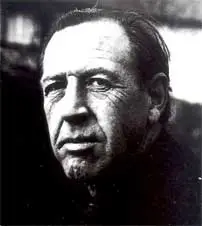
Raymond Williams: Adult Education and the Public Intellectual

Raymond Williams: Adult Education and the Public Intellectual

Raymond Williams came into my life as a result of work I undertook on my thesis in 2014 on adult education. My PhD supervisor, Professor John Holford, suggested I explore Williams’s An Open Letter to W.E.A Tutors (1961) to understand some of the complexities of the historical place of adult learning and the role of the Workers’ Educational Association. What was immediately clear to me was that Williams was arguing for a form of education for the many and by the many, not led by the elite few. He was deeply sceptical of the notion of cultural or educational imperialism, commenting in his letter that:

Scroll to Top