The following blog post provides an account of Sharon’s new Lost Spaces research project, which considers residential adult education in the UK. The project will run until September 2026, where a repository of pictures, audio and video will be provided as part of the project outputs.
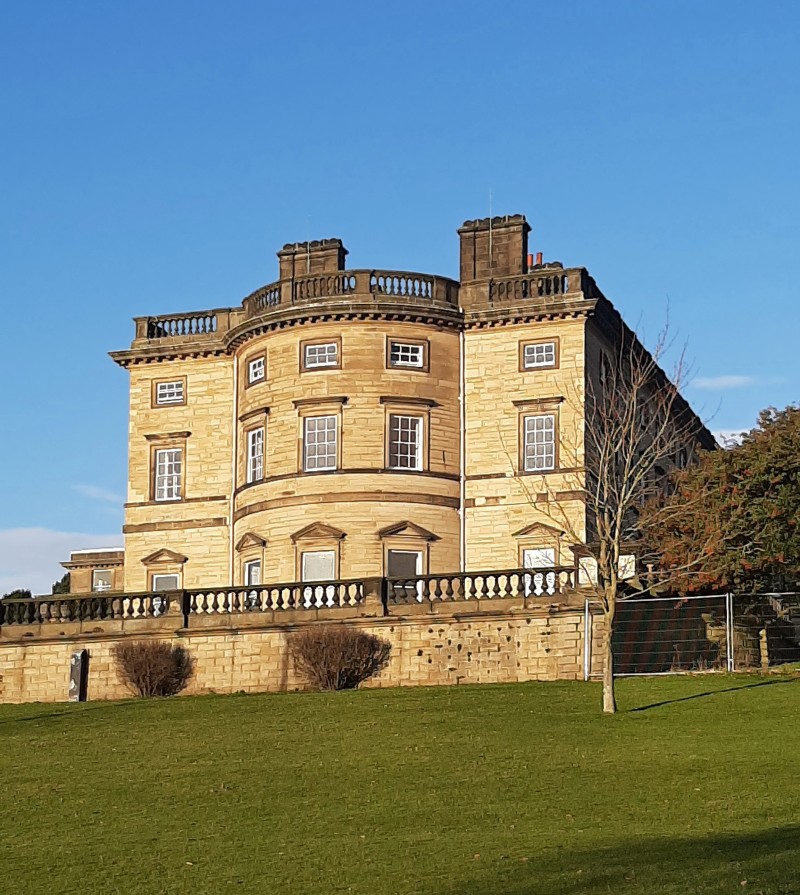
My research will explore the meanings and memories associated with former places and spaces of adult education in the UK, particularly residential adult education. By ‘lost spaces’, I refer to physical sites or locations which were used for pioneering adult education purposes in the past but are no longer in existence or have been repurposed. Nonetheless, such spaces provide a focus for the memories, experiences and voices of those who benefited from them, and many sites have stimulated educational developments beyond their life span. These elements are what I want to explore in my research.
Between the wars and especially post-Second World War, it is estimated that thirty-five to forty short-term residential colleges were created, often in the stately homes of the former aristocracy, to meet a growing need for second chance and progressive education for adults. The colleges offered access to venues beyond their everyday experience and to eclectic courses ranging in duration from a long weekend to up to two weeks. Local people could engage in courses in, amongst others, arts and crafts, organic farming, ecology and environmental issues, political history and local history, industrial archaeology, sociology, psychology, musical analysis and industrial/technological innovations in, for instance, furniture making and design. For many adults, the school system had failed them or had set them on a path – into technical/vocational education or, for a minority, academic education. Many felt they had been channelled in one direction, with little opportunity for broader self-development or new learning.
The overall aim is to map both physical as well as conceptual and teaching spaces, including those identified as residential colleges and others that stood outside this tradition over the course of the last 100 years. I want to chart how their pedagogical and subject-related innovations impacted beyond the life of the building/organisation and where these new movements migrated upon their closure by creating both a living history archive and a book – based on interviews with former staff and students, documentary analysis and written testimony from archival records. I will also document the role of the visionary educational figures who influenced the development of these spaces, such as Sir Alec Clegg, Chief Education Officer at West Riding County Council, responsible for the founding of Bretton Hall College in West Yorkshire in 1949, a teacher training college which specialised in innovative courses in design, music and the visual and performance arts.